Synthetic amorphous silica (SAS) is a vital ingredient in products people use every day and is widely used across industries in Europe. As SAS undergoes a regulatory classification review in the European Union, understanding real-world use conditions and scientific evidence is essential.
What is SAS?
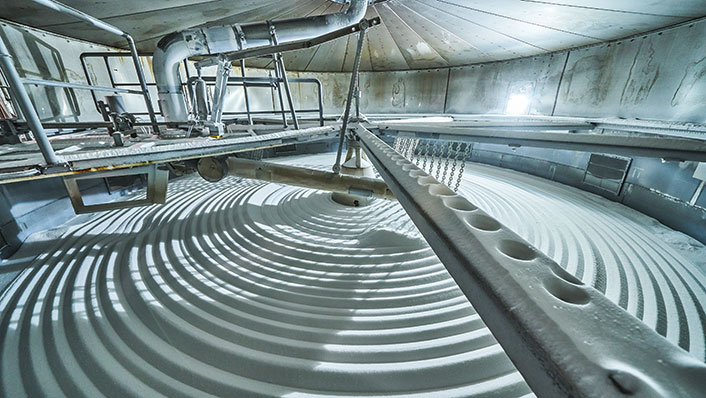
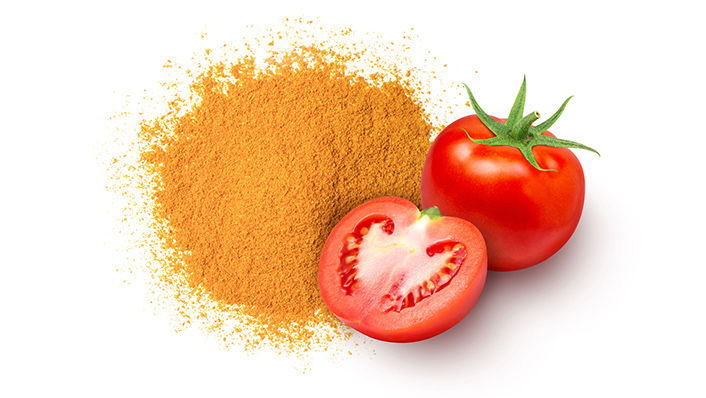
SAS is a man‑made form of silicon dioxide that has been used safely for decades in products people rely on every day. It is found in toothpaste, food, medicines, cosmetics, paints and coatings, solar panels, semiconductors, and electric vehicle batteries. SAS plays an important role in product performance, quality, and sustainability across a wide range of industries.
Across industries, SAS contributes to:
- Stability, texture, and performance in food, pharmaceuticals, and personal care products
- Durability and efficiency in clean technologies such as batteries and solar panels
- Quality, safety, and consistency in coatings, catalysts, and advanced materials
How is SAS used in real‑world conditions?
In commercial and consumer applications, SAS is most often used in bound or formulated forms rather than as free airborne dust.
SAS is different from crystalline silica. Its structure, physical properties, and behavior determine how it interacts in real‑world manufacturing and consumer settings. Those differences are central to how SAS should be assessed from a safety and regulatory perspective.
Under normal handling and use conditions, people are not exposed to the artificially generated, ultra‑fine, high‑concentration particles used in certain laboratory inhalation studies.
These real‑world use conditions are an important part of understanding exposure and risk.
Synthetic amorphous silica is currently under review within the EU’s harmonized classification and labeling (CLH) process.
What does the scientific evidence show?
A broad body of scientific evidence supports the safe use of SAS under real‑world conditions:
- Human data: Decades of human exposure show no evidence of harm from synthetic amorphous silica (SAS) in everyday products like toothpaste, paint and food.
- Exposure context: Lab tests don’t reflect how SAS is actually used or handled in real life.
- Independent scientific review: The EU Scientific Committee on Consumer Safety (SCCS) has reviewed comprehensive data packages and accepted the safe use of SAS in cosmetics when used as intended.
Regulatory decisions are strongest when they consider the full weight of evidence, including real‑world exposure, particle behavior, and long‑standing human experience.
Why the classification approach matters
Regulatory classification has implications that extend well beyond labeling. A classification that does not adequately reflect real‑world exposure and use conditions could:
- Limit the availability of products with a long history of safe use
- Drive significant compliance, reformulation, and administrative costs
- Disrupt supply chains across multiple industries
- Affect jobs, investment, and manufacturing competitiveness in Europe
In Europe alone, SAS supports more than 10,000 jobs and underpins a value chain of approximately €300 billion.
How SAS differs from other forms of silica
Silica is not a single material, and different forms behave differently:
- Crystalline silica: Naturally occurring, respirable under certain conditions, and regulated due to established health risks.
- Synthetic amorphous silica: Engineered materials with distinct particle structures that do not exhibit the same behavior or exposure patterns in real‑world use.
Effective regulation depends on recognizing these distinctions rather than applying a one‑size‑fits‑all approach.
Frequently Asked Questions
How safe is synthetic amorphous silica?
SAS has a long history of safe use in regulated applications, including food, cosmetics, coatings and pharmaceuticals.
Is SAS the same as crystalline silica?
No. SAS and crystalline silica differ in structure, behavior, and exposure characteristics, which is why they are evaluated differently in scientific and regulatory assessments.
Is all silica the same?
Silica comes in many forms, like crystalline and amorphous. Grace produces a wide range of silica products, including precipitated silica, colloidal silica, and silica gels, for diverse applications such as catalysts, coatings, food, and personal care. Even among amorphous types of silica (such as SAS), how it’s made affects the size and shape of the particles. Silica gel cannot easily break into tiny particles unless done artificially. Given that, under normal handling and use conditions, SAS is unlikely to be broken into particles small enough to be airborne and respirable. Blanket classifications ignore important differences like these.
Why do some laboratory studies raise concerns?
Some animal inhalation studies use exposure levels and particle forms that do not reflect real‑world manufacturing or consumer conditions. These studies must be interpreted in context.
Is SAS used in food, cosmetics, and medicines today?
Yes. SAS has a long history of safe use in regulated applications including food, cosmetics, and pharmaceuticals.
Why is the EU reviewing the classification of SAS? What happens next in the EU process?
In October 2025, the European Chemicals Agency’s Risk Assessment Committee (RAC) issued an opinion recommending a classification of SAS as Specific Target Organ Toxicity – Repeated Exposure, Category 1 (STOT RE 1). The opinion relies heavily on certain animal inhalation studies.
The RAC opinion is not binding. The European Commission will develop a proposal based on the RAC opinion. That proposal will be reviewed and discussed with Member States before any final decision is made.
Learn more
1. Particle Platform – an informal alliance of EU industry associations, dedicated to scientific understanding, exchange of information and exploring science-based practical solutions for regulatory and policy developments connected to materials in the form of particles.
2. SASforReach – a consortium of 13 companies working jointly to make sure SAS meets EU chemical safety rules (REACH). They handle the required paperwork and scientific submissions for everyone involved in using or making SAS.
3. Verband der Chemischen Industrie (VCI) – German organization representing the interests of around 2,300 companies in the chemical and pharmaceutical industry.
Stay informed
Sign up for updates and resources as the EU classification review progresses.